The missed call that cost you a $4,000 job.
When a homeowner cannot reach you, they call the next name on the list within minutes. Here is a simple, no-cost system for covering calls during jobs, after hours, and on weekends.
- The $4,000 phone call you never knew happened
- Why voicemail stopped being a real answer
- What actually happens in the first five minutes after a missed call
- The real problem: you’re usually busy doing the work
- A simple, no-cost system for covering calls during jobs
- Designate a backup answerer
- Forward calls when you know you’ll be unreachable
- Set a callback window you can actually hit, and tell callers what it is
- Send an immediate text when you can’t answer live
- Handling after-hours and weekend calls without hiring anyone
- Decide, on purpose, what “after hours” means for your business
- Weekend coverage doesn’t require a full crew
- Answering the call is only step one, and what happens after matters just as much
- Your website is either helping the phone ring or making the problem worse
- Why reviews matter long before anyone picks up the phone
- Turning this into a habit instead of a one-time fix
A missed call from a potential customer rarely stays missed for long. It just becomes someone else’s job. When a homeowner with a broken water heater or a dead AC unit can’t reach you, they call the next name on the list within minutes. Voicemail doesn’t win that job. Someone who picks up does.
The $4,000 phone call you never knew happened
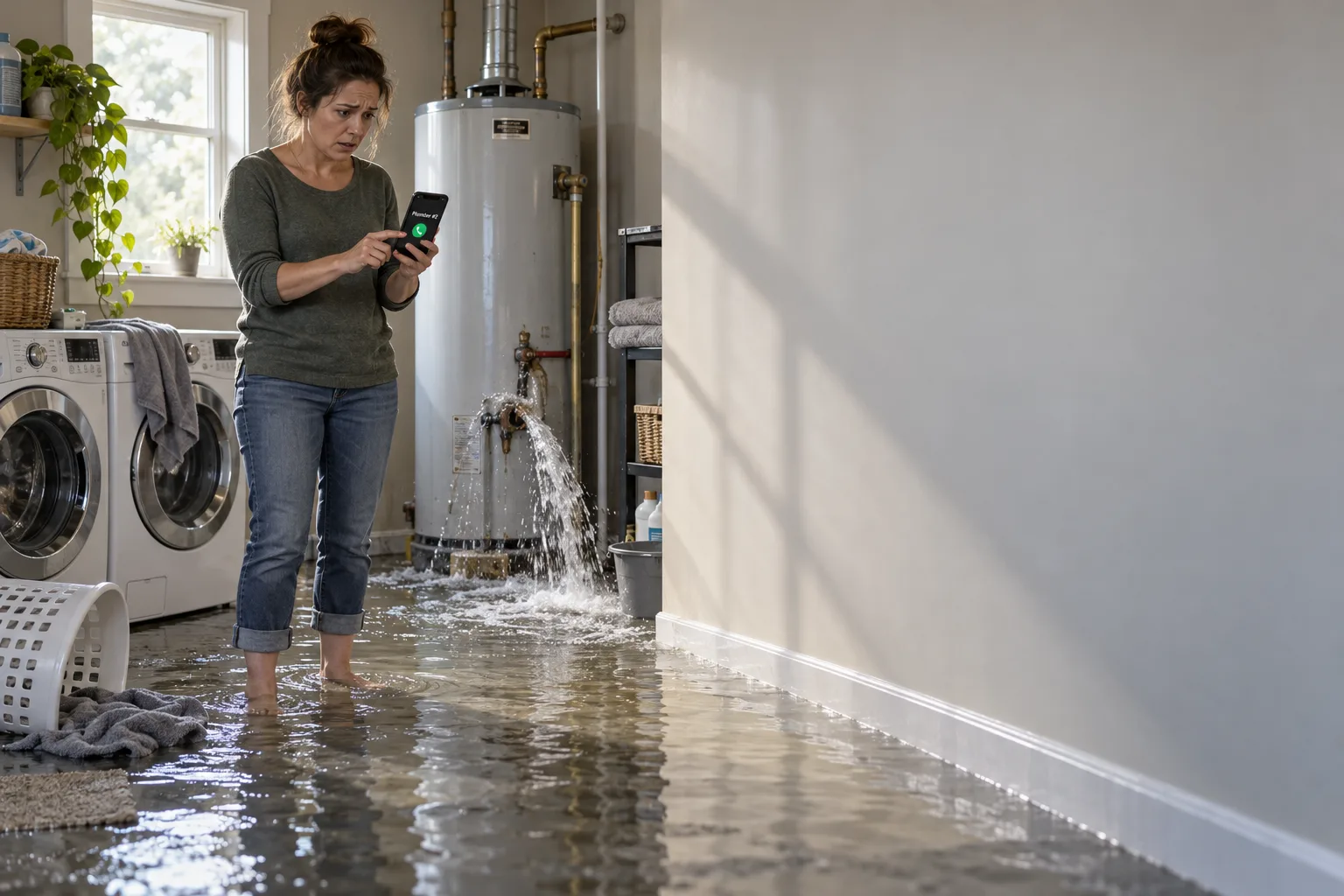
Picture a homeowner whose water heater just burst on a Tuesday afternoon. Water is spreading across the laundry room floor. She pulls up Google on her phone, searches “plumber near me,” and calls the first number that looks legitimate. It rings four times and goes to voicemail. She doesn’t leave a message. She hangs up and calls the second number on the list. That one answers on the second ring, asks a few quick questions, and promises someone can be there within two hours. Job booked. Water heater replaced. Drain lines, labor, parts, and a service call fee later, that’s a $4,000 ticket that belonged to the first plumber on paper and the second one in reality.
This happens every day in every home service trade. The business that missed the call never finds out what it lost. There’s no notification that says “you just lost a four-figure job because nobody picked up.” The lead just vanishes, and the owner goes on believing business is a little slow this month, without ever connecting it to the three calls that went unanswered while a tech was under a sink or on a roof.
Why voicemail stopped being a real answer
There was a time when leaving a voicemail and waiting for a callback was normal. That time is over. Homeowners dealing with a plumbing leak, a broken furnace in January, or a garage door that won’t close are not in a patient mood. They’re often comparing three or four companies in the same ten minutes, and they’re going to work with whoever responds first and sounds confident.
Voicemail also puts the burden of effort entirely on the caller. They have to speak into a recording, trust that someone will actually listen to it, and then wait, sometimes for hours, for a callback. Most people don’t wait. They move to the next option before they’ve even finished dialing the one after yours. A missed call with no human response isn’t a lead in a holding pattern. It’s a lead that’s already gone.
None of this means voicemail is useless. It’s a decent backup for the small percentage of callers who are committed enough to wait. But it cannot be the plan. It has to be the last line of defense, not the first.
What actually happens in the first five minutes after a missed call
Response speed is not a nice-to-have in home services. It’s close to the entire game. A caller who doesn’t get an answer typically tries another business almost immediately, especially for anything that feels urgent: a leak, no heat, no air conditioning, an electrical issue, a garage door stuck open overnight. The companies that win these jobs aren’t necessarily the cheapest or the most experienced. They’re the ones who answered the phone or called back within a few minutes.
Think about your own behavior as a consumer. If you call a restaurant for a reservation and nobody answers, do you call back in an hour? Probably not. You call the next restaurant. Home service calls work the same way, except the stakes for the homeowner are usually higher: water is actively damaging their home, or their family is uncomfortable without heat or air. Urgency plus multiple options equals almost zero patience for a callback that comes hours later.
The lesson here isn’t complicated: every minute a call goes unanswered is a minute closer to that customer booking with someone else. The businesses that treat phone response as a core operational priority, not an afterthought handled whenever someone gets a free second, are the ones that convert more of these moments into actual jobs.
The real problem: you’re usually busy doing the work
Most owners already know they should answer the phone fast. The issue isn’t awareness, it’s logistics. You’re on a roof. You’re elbow-deep in a furnace. You’re driving between jobs with your hands full and your phone buried in a pocket. The call comes in at the exact moment you’re least able to take it, and that’s not bad luck. It’s the nature of hands-on service work. You can’t fix a water line and talk to a new customer at the same time.
This is exactly why “just answer the phone” isn’t a complete strategy. You need a system that accounts for the reality that the owner or the lead tech is frequently unavailable during business hours, let alone nights and weekends when a huge share of emergency calls come in.
A simple, no-cost system for covering calls during jobs
You don’t need new software or a call center to fix most of this. You need a plan that matches who’s available to when calls are likely to come in, and a few habits that make sure no call just rings out into nothing.
Designate a backup answerer
If you’re a one-person operation, this is harder, but if you have even one other person (a spouse who handles the books, an office admin, a second tech who isn’t on a ladder right now), give that person explicit responsibility for picking up when you can’t. Not “if you get a chance.” Explicit, assigned, expected. Most missed calls happen because everyone assumed someone else would grab it, or because nobody was ever formally put in charge of phone coverage.
Forward calls when you know you’ll be unreachable
Most phone carriers and basic business phone systems let you forward calls to a second number with a couple of taps. Before you climb onto a roof or crawl into a tight attic space where you know you won’t hear or feel your phone, forward your business line to whoever is covering for you that day. It takes fifteen seconds and it’s free on most plans. The habit is the hard part, not the technology.
Set a callback window you can actually hit, and tell callers what it is
If nobody can answer live, the voicemail greeting and any text autoresponder should set a specific, honest expectation: “We’re currently on a job. We return all calls within 15 minutes.” Then you have to actually hit that number. A vague promise like “we’ll call you back soon” doesn’t reduce anxiety for someone standing in a flooding bathroom. A specific window does, and it gives you a measurable standard to hold your team to.
Send an immediate text when you can’t answer live
Nearly every smartphone and basic business line today can be set up to fire off an automatic text the moment a call is missed. Something simple: “Sorry we missed your call. We’re on a job right now. Text us what’s going on and we’ll get back to you within 15 minutes, or call us back and we’ll answer as soon as we can.” This does two things. It tells the caller you’re a real, responsive business instead of a dead end, and it opens a second channel (text) that a lot of people actually prefer over waiting on hold or leaving a voicemail.
Handling after-hours and weekend calls without hiring anyone
Emergencies don’t follow business hours. Pipes burst at 9 p.m. Furnaces quit on Saturday mornings in February. Garage doors jam shut right before someone leaves for work on a Sunday. If your phone just rings into nothing after 5 p.m. or on weekends, you’re handing every after-hours emergency directly to a competitor who has even a bare-bones system in place.
You don’t need a 24-hour staffed call center to compete here. You need three things: a clear voicemail and text message that sets expectations, a rotating on-call schedule if you have more than one person on your team, and a fast habit of checking messages first thing in the morning if you genuinely can’t take calls overnight.
Decide, on purpose, what “after hours” means for your business
Some owners choose to take emergency calls personally around the clock, especially early on when every job matters. Others set a hard cutoff and accept that they’ll lose some overnight emergency work in exchange for a sustainable schedule. Both are legitimate choices. The mistake is not choosing at all and instead just hoping the phone doesn’t ring at 11 p.m. Decide what you’re actually offering, then make sure your voicemail, website, and text responses say exactly that, so callers know whether to wait for you or look elsewhere.
Weekend coverage doesn’t require a full crew
If you have two or three employees, a simple rotation where one person carries the “on-call” phone each weekend spreads the load without requiring anyone to be perpetually available. Even a basic paper or shared-calendar schedule works. The goal isn’t fancy logistics. It’s making sure a weekend call has at least a fighting chance of reaching a live person instead of defaulting to silence every single Saturday.
Answering the call is only step one, and what happens after matters just as much
Getting someone on the phone is the first hurdle, but plenty of jobs still slip away after that initial conversation. A homeowner calls, you talk, you say you’ll get them an estimate, and then three days go by before it shows up. By then they’ve likely already hired someone else. The same urgency that applies to answering the phone applies to following through on what you promised during that call.
If you tell a caller you’ll text them a ballpark price or a scheduling window “later today,” that has to actually happen later today, not whenever the week slows down. If an estimate requires an in-person visit, book that visit while you’re still on the phone with them rather than saying you’ll “follow up to schedule it.” Every extra step between the first call and a confirmed appointment is another chance for the customer to call someone else in the meantime.
The same logic applies after a quote goes out. A lot of businesses send an estimate and then go silent, assuming the customer will reach out if they’re interested. Most won’t. A quick check-in call or text a day or two later (“just following up on the quote I sent, happy to answer any questions”) closes jobs that would otherwise die quietly in someone’s inbox.
Your website is either helping the phone ring or making the problem worse
A lot of missed-call losses start before the phone even rings. If your website is slow, hard to read on a phone, or buries your phone number three clicks deep, some homeowners give up before they ever dial. Your phone number should be visible and tappable at the top of every page, not hidden in a footer. A “Call Now” button that actually dials the phone on mobile removes friction for someone standing in a wet basement trying to find help fast.
Online booking or a simple contact form adds another option for people who’d rather not call at all, which is a real and growing share of customers, especially for non-emergency work like routine landscaping or seasonal HVAC maintenance. Not every job is a burst-pipe emergency. Giving people a low-pressure way to request service without picking up the phone catches leads who would otherwise close the tab and move on.
Why reviews matter long before anyone picks up the phone
By the time someone calls you, they’ve usually already decided you’re worth calling, often based on your reviews. A business with a handful of old, mediocre reviews is easy to skip in favor of a competitor with dozens of recent five-star ones. This isn’t about gaming the system. It’s about making it a habit to ask satisfied customers for a quick review right after a job wraps up, while the good experience is still fresh.
A simple ask, like “If you were happy with the work, a quick Google review really helps us out,” costs nothing and takes a customer thirty seconds. Over months, this steadily builds the kind of visible, current reputation that makes a homeowner comfortable enough to call you first instead of scrolling further down the search results.
Turning this into a habit instead of a one-time fix
None of what’s described here requires new software, a big budget, or hiring anyone. It requires deciding, deliberately, how your business handles calls when you can’t personally answer, and then actually following that plan every day instead of only thinking about it after you’ve lost a job you really wanted.
Start this week with three things: set up call forwarding to a backup person during jobs, turn on an automatic missed-call text if your phone supports it, and write down a specific callback time promise you can actually keep. Then ask the next few satisfied customers for a review. Small, consistent habits like these are what separate home service businesses that grow steadily from the ones that wonder, month after month, where all the calls went.
If your website is part of the problem (slow to load, hard to find the phone number, or missing an easy way to request service online), that’s worth fixing too, since it’s often the first thing standing between a homeowner and that call in the first place. Lead Furnace builds and runs websites for home service businesses designed to turn visitors into calls instead of lost opportunities. Get your free Lead Leak Report.
Frequently Asked Questions
A missed call can cost a business thousands of dollars, especially in home services where jobs can average around $4,000. For instance, if a homeowner with a broken water heater calls and doesn’t get an answer, they will likely call the next available service. This means the business not only misses out on that job but also the associated revenue from parts and labor.
Responding quickly to calls is critical because homeowners facing urgent issues, like plumbing leaks or heating failures, often call multiple service providers in a short time. If they don’t reach someone immediately, they will move on to the next option. Companies that prioritize fast responses can convert more leads into jobs, significantly impacting their bottom line.
Instead of relying on voicemail, businesses should implement systems that ensure calls are answered promptly. This could include hiring additional staff, using call forwarding, or employing answering services. Voicemail should be a last resort, as it places the burden on the caller and often leads to lost opportunities.
Businesses can improve their call response rates by training staff to prioritize phone calls and establishing clear protocols for handling incoming inquiries. Additionally, utilizing technology such as call tracking and analytics can help identify peak call times and adjust staffing accordingly, ensuring that calls are answered promptly.
The consequences of not answering calls in home services can be severe, leading to lost jobs and revenue. Homeowners often do not leave messages and will quickly seek out competitors. This not only results in immediate lost sales but can also harm the business’s reputation if customers feel neglected or unvalued.